
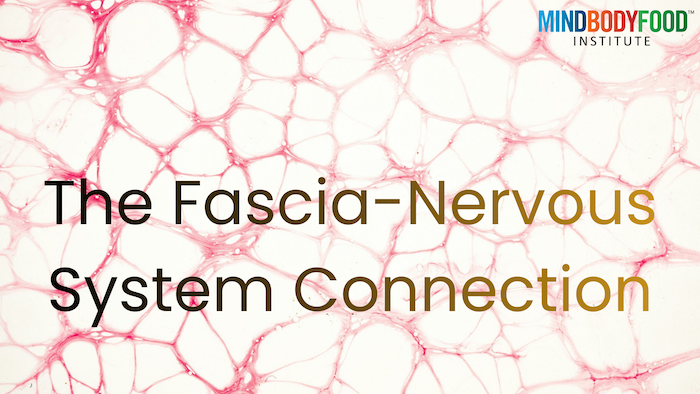
If you’ve been increasingly noticing more talk about fascia lately, you’re not alone. It’s finally having a moment that is, quite frankly, long overdue. It’s been missing from the somatic healing, trauma therapy, and nervous system regulation conversations for far too long. Fascia is the missing link in nervous system healing.
Once dismissed as “packing material” around our muscles and organs, fascia is now understood to be one of the body’s most intelligent and communicative systems holding us together. It’s the system that connects the anatomical systems of the skeleton and muscles to each other (often referred to as the musculoskeletal system). Current research confirms fascia’s essential role in communication, immunity, and pain modulation.
What Exactly is Fascia?
Fascia is the continuous web of connective tissue that wraps around and weaves through every muscle, bone, organ, and cell. There are five primary forms:
- Superficial fascia — lies under the skin; stores hydration and fat.
- Deep fascia — surrounds and integrates muscles and joints.
- Visceral fascia — supports organs.
- Meningeal fascia — envelops the brain and spinal cord.
- Intercellular matrix — the fluid lattice between all cells.
Fascia is rich in nerve endings and fluid for lubrication, flexibility and movement of the muscles, joints, organs and bones it supports. It’s strong yet flexible, holding the entire body together while transmitting sensory information in every direction. Fun fact: when magnified x25, fascia looks like cobwebs yet it provides strength via structure and shape.
Fascia acts like a dynamic communication network that’s constantly communicating with your nervous system; relaying information about movement, posture, pressure, and emotion. It sends and receives signals faster than nerves alone! You could think of it as your body’s internal internet. It connects every system, transmits energy and information, and allows the whole to function as one intelligent organism.
The problem is when through injury (through sports or accidents), repetitive strain or non-ergonomic and poor postural positions, the fascia develops tension that restricts the communication flow. And this in turn impacts how we process emotions, regulate our nervous system, and recover from stress or trauma.
The Science of Fascia
Emerging research shows fascia is a sensory-rich, communication-dense tissue influencing everything from pain and inflammation to emotional health and interoception (your brain’s awareness of internal feeling states).
Scientists like Dr. Helene Langevin, director of the National Centre for Complementary and Integrative Health (NCCIH), call it the body’s “meta-system” because it interacts with every other system: nervous, immune, endocrine, lymphatic, and circulatory. It’s a true bridge between body and mind, and a key to understanding how we feel, heal, and stay resilient. It’s also changing how we understand stress, pain, emotional processing, stress behaviour, and even longevity.
Fascia is rich in proprioceptors and interceptors, the sensory nerve endings that help us know where we are in space and how we feel inside. This makes fascia a key player in both embodiment and emotional awareness.
When fascia becomes restricted, our perception narrows. When it releases, our awareness expands. When we improve fascial health, we support every level of human function (physical, mental, and emotional).
Healthy fascia supports:
• Efficient nutrient exchange between blood and cells
• Reduced inflammation and pain sensitivity
• Improved mobility, energy, and emotional stability
Fascia & Emotional Healing
Every emotion we experience has a physical expression. When we cry, our chest heaves. When we’re afraid, our shoulders tighten. When we brace, hold or suppress emotion, the body contracts and fascia tightens with it. This is fascia’s language; it contracts, twists, and thickens when we experience emotional stress or threat because it’s right there experiencing all of it with us.
Over time, these protective patterns become stored “stories” written into our tissues: protective armouring, bracing, or collapse. That’s why so many people experience emotional release during bodywork, stretching, movement, or breath work. Fascia and emotion are inseparable.
When fascia is manually or somatically released, people may experience:
- Crying, laughter, or shaking (somatic discharge).
- Flashbacks, images, or emotional memories surfacing.
- Immediate postural change, pain relief, or lightness.
Fascia is not just structural; it’s emotional and energetic. It remembers what the mind forgets. When fascia softens, it can finally let go of the tension, fear or grief that’s been locked inside so it – and you – are free to move again.
The Fascia–Nervous System Connection
Fascia and the nervous system are in constant communication. Healthy fascia supports smooth neural signalling, emotional regulation, and interoception.
When fascia is supple and hydrated, signals travel efficiently, interoceptive awareness improves, and the autonomic nervous system can move fluidly between states of safety, activation, and rest. But when fascia becomes dehydrated, inflamed, or rigid whether from chronic stress, trauma, tension or lack of movement, it can interfere with that communication. The nervous system then perceives restriction as threat, keeping you stuck in patterns of hyper-vigilance, fatigue, pain, anxiety or emotional dysregulation.
In other words, tight fascia keeps the body in survival mode.
So, supporting fascial health isn’t just about flexibility but restoring the body’s ability to feel safe to move and feel without fear or restriction, both of which are essential for self-regulation and true healing to occur.
How to Care for & Support Fascia
Fascia responds best to gentle, consistent care. It doesn’t like or need force (unless you like unnecessary pain!).
Here are a few science-based ways to keep it healthy and hydrated:
1. Move in every direction
Gentle stretching, spiralling, walking, and mindful movement keep fascia elastic and fluid.
2. Stay hydrated
Fascia is mostly water. Electrolyte balance and mineral support are key for tissue conductivity, which supports detoxification and lymphatic flow.
3. Breathe and hum
Sound and breath vibrations stimulate the fascial “domes” (the jaw, diaphragm, and pelvic floor) to release stored tension.
4. Feel your feelings
Emotions move through the same body systems that fascia supports. Allowing safe expression through laughter, tears, shaking and rest helps to keep fascial flow alive.
5. Rest and regulate
Stillness, sleep, and co-regulation with safe people all nourish the fascial-nervous system connection.
Fascia, Emotional Processing (Release) & Nervous System Regulation
Fascia is more than anatomy, it’s the bridge between structure and sensation, emotion and energy. When fascia flows, we feel alive, connected, and at ease. When it’s restricted, we disconnect from ourselves and from others.
I strategically layer this information in my Emotional Processing & Nervous System Regulation (EPNSR) course. It’s a professionally recognised practitioner certification with additional accredited Continuing Professional Development (CPD) recognition for coaches, therapists, bodyworkers and wellness professionals.
EPNSR students learn to:
• Understand the autonomic nervous system through a Polyvagal-informed lens.
• Recognise fascial and nervous system tension patterns linked to stress and trauma.
• Facilitate safe somatic awareness and body-led emotional release and regulation.
• Integrate trauma-informed approaches into emotional healing and nervous system care.
This training is ideal for both existing professionals and aspiring practitioners looking to bring neuroscience, trauma-sensitive practice, and somatic intelligence into their professional work and/or personal growth and healing.
Check out the Emotional Processing & Nervous System Regulation Practitioner Certification here and the Somatic Life Coaching & Nervous System Regulation Practitioner certification here.
Deepen your understanding of how the body stores, expresses and heals emotion and learn how to help yourself and others move from survival to safety, to healing. When we hydrate, move, breathe, and feel, we invite the fascia to return to flow.
Because when fascia flows, so do we.
Author:
Viki Thondley
Viki Thondley-Moore is an Integrative Holistic Counsellor, Neuro-Somatic Coach, Clinical Hypnotherapist, Mind-Body Practitioner, Wellness & Nutrition Coach, Meditation Teacher, Nervous System Educator and Disordered Eating Specialist. Viki is Founder/Director of the MindBodyFood Institute.