
“Self-compassion is not weakness. It’s the foundation for change that lasts.”
This quote often stops people in their tracks because it challenges a core belief many of us have been conditioned to hold; that we have to be hard on ourselves to succeed, to improve, or to be worthy of love and acceptance.
But in my practice as a holistic counsellor, coach, hypnotherapist and somatic practitioner, I’ve seen the opposite to be true time and time again.
Too often self-compassion is mistaken for self-indulgence, laziness, or a way to “let ourselves off the hook”. This couldn’t be further from the truth.
Self-compassion is the courageous act of showing up for yourself especially in moments of pain, failure, or uncertainty. It’s how we hold space for healing, and it’s how we begin to regulate our inner world enough to make consistent, aligned choices.
From a holistic lens, self-compassion isn’t just a mental or emotional concept. It’s an embodied way of being that touches every part of your life: mind, body, emotions, behaviour, and spirit.
Self-Criticism Doesn’t Work
Let’s be clear: temporary motivation through guilt or shame can work but only short-term. It’s like trying to get your veggies to grow by yelling at the soil (I actually speak to mine with excitement and gratitude for the nourishment they will provide 😉 ).
Here’s what happens when self-criticism leads:
- The nervous system stays in fight-flight, or (functional) freeze.
- We become hypervigilant, exhausted, and disconnected from joy.
- Motivation becomes fear-based and inconsistent.
- The body holds tension, and we lose the ability to rest or trust ourselves.
Eventually, we burn out or self-sabotage. Not because we’re weak but because no one thrives under chronic self-attack.
Science and Somatics of Self-Compassion
Research by Dr. Kristin Neff, a pioneer in self-compassion studies, shows that people who practice self-compassion are more likely to take responsibility for their mistakes, more likely to pursue long-term goals, and less likely to experience anxiety and depression.
From a somatic perspective, self-compassion is a nervous system regulator.
When we practice it:
- The vagus nerve activates, promoting calm and connection.
- Our breath deepens and our muscles soften.
- We gain access to the prefrontal cortex, which is our centre for decision-making, empathy and wisdom.
Self-compassion makes us more resilient, not less.
A Holistic + Somatic Approach
Here’s are four simple actions you can start choosing to incorporate into your day:
Pause and Notice
Use mindfulness to check in with yourself without judgment. Ask:
- What am I feeling right now—physically and emotionally?
- Where do I feel tension or discomfort in my body?
Tip: Try a simple body scan. Sit quietly and bring awareness to your feet, legs, belly, chest, shoulders, jaw. Just notice what’s there.
Soften the Inner Voice
If you catch yourself being harsh or critical, gently interrupt it. Ask:
- “What would I say to a friend in this moment?”
- “Can I bring in a tone of warmth, even if I’m struggling?”
Somatic practice: Place a hand over your heart or your belly. Feel the warmth. This touch communicates safety to your nervous system.
Anchor with the Breath
Deep, intentional breathing helps ground your awareness in the present and sends a signal of safety into and through your body.
Try this: Inhale for 4, hold for 4, exhale for 6. Repeat a few times until you feel a subtle shift.
Small Acts of Self-Respect
Self-compassion isn’t just a feeling, it’s a behaviour. How you show up every day and care for yourself. Show yourself respect through daily choices. Here are some examples:
- Nourish your body and brain with real, whole food.
- Honour your low energy with moments of rest.
- Set healthy boundaries with people around you.
- Speak your truth kindly and don’t betray yourself by not being truthful with others.
These micro-practices build internal trust.
KEY TAKEAWAY: Sustainable change begins in safety.
- You don’t need to be “perfect” to grow.
- You don’t need to fix everything before you’re worthy of love.
- You don’t need to hustle yourself into wholeness.
You just need to start from where you are, with kindness.
That’s the foundation of sustainable transformation because when you feel safe within yourself, you no longer seek to change or conform yourself to be lovable in the eyes of others.
You change because you love yourself.
If you’re tired of the cycle of striving, crashing, and starting over consider this:
✨ What might become possible if you led your life with compassion instead of criticism?
✨ What if your inner world became a place of refuge, not resistance?
The answers don’t come all at once. But they begin in stillness and regulation. They come when we’re feeling calm and centred; in the quiet moments when we feel most connected to the wisdom of our authentic self.
They reveal themselves via self-compassion.
PS. If this is something you are acutely aware of needing to overcome, check out our courses – particularly the Emotional Processing & Nervous System Regulation certification.
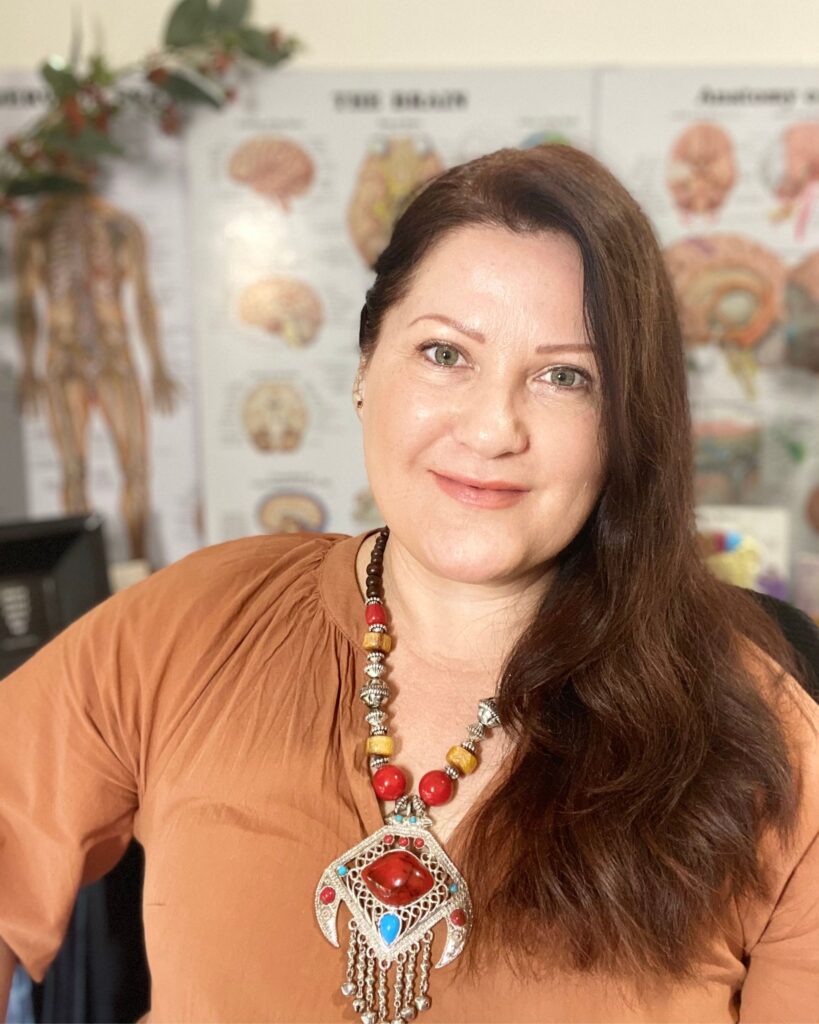
Author:
Viki Thondley
Viki Thondley-Moore is an Integrative Holistic Counsellor, Neuro-Somatic Coach, Clinical Hypnotherapist, Mind-Body Practitioner, Wellness & Nutrition Coach, Meditation Teacher, Nervous System Educator and Disordered Eating Specialist. Viki is Founder/Director of the MindBodyFood Institute.